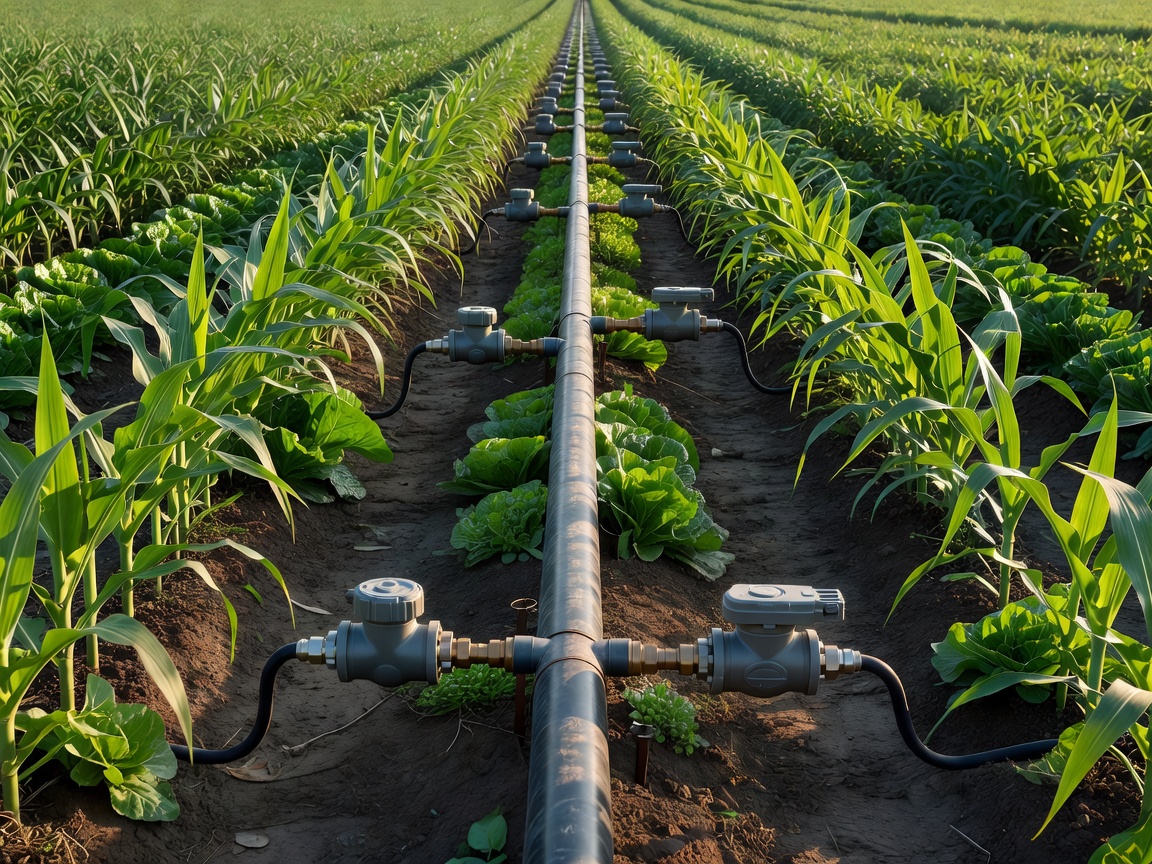
Irrigation distribution is the physical link between a water source and the crop. A system may use a well, reservoir, canal, river intake or other permitted source, then move water through pumps, treatment or filtration, mainlines, submains, valves and application equipment. Each link affects the pressure and flow that can be delivered. Understanding that route helps a farm manager tell the difference between a scheduling problem and an equipment or design problem.
Map the route before changing a schedule
Start with a practical system map. Note the source, pump, filters, pressure regulators, meter, mainline, zone valves, laterals and outlets. Mark elevations, shutoff points, drains and places where access is difficult. Include the operating sequence: which zones may run together, what pump starts and stops, and how the controller communicates with valves. An accurate map can be modest; its purpose is to support inspection and troubleshooting, not to look elaborate.
Measure or confirm the system’s operating flow and pressure where it matters. Pump specifications alone do not tell the whole story because actual performance depends on lift, pipe friction, fittings, wear, source level and other conditions. Pressure should be checked at representative points while the system is operating. A gauge at the pump may not reveal a restriction near the end of a line or a mismatch between zones.
Match components to application and water quality
Drip and micro-irrigation systems deliver water near crop rows through small outlets, which makes filtration, pressure control and regular flushing important. Emitter flow characteristics and spacing should fit the crop layout and soil’s ability to distribute water. In heavier soils, lateral movement may differ from movement in coarse soils. A wet patch at one emitter does not prove that a full root zone is adequately supplied.
Sprinkler systems depend on nozzle condition, operating pressure, spacing, wind and the overlap pattern. Changes in nozzle wear or pressure can alter application. Center pivots and linear-move systems add moving machinery, drive components, end guns and alignment considerations; a uniform-looking pass does not eliminate the need to inspect application patterns. Surface irrigation systems depend on field grading, flow management, soil intake and timing. Every method has operating conditions that should inform the system plan.
Water quality affects filters, emitters, pipes and maintenance routines. Suspended material can clog small passages; dissolved minerals or biological growth may also create problems depending on the water source and system. Select filtration and treatment practices based on water analysis and equipment guidance. Do not adopt a treatment simply because it is common elsewhere: compatibility, local regulations, worker safety and disposal requirements matter.
Pressure, flow and uniformity tell different things
Pressure describes force in the system at a point; flow describes the volume moving through it over time. Both are needed to understand operation. A valve can open while a clogged filter restricts flow. A pump may maintain pressure near its outlet while distant zones receive less. An unexpectedly high flow may indicate a break, a valve left open or a changed operating configuration. Meters, gauges and a written baseline make changes easier to spot.
Distribution uniformity is a way of assessing how evenly water is applied across a selected area. The test method depends on the irrigation system. Catch-can checks can help assess sprinkler patterns; emitter measurements can help evaluate drip systems. Results depend on careful placement, suitable weather conditions, consistent collection periods and a clearly defined zone. These checks describe sampled conditions and should be interpreted with knowledge of the system and field.
Look beyond the average. Differences at the beginning and end of a lateral, high and low points, or across a slope may matter to crop response. Compare measurements at representative locations, then note what was operating and what maintenance state the system was in. A test from one day is a baseline, not a guarantee that conditions remain unchanged.
Zone design and control logic should agree
Divide the system into zones that can be supplied within available pump capacity and pressure limits. Differences in crop, soil, planting dates, slope or application equipment may justify separate zones, while overly small zones can add complexity and operational burden. The control plan should reflect real valves and hydraulic limits. If a controller allows several zones to run together, confirm that the combination is within the source and pump capacity.
Protect the water route with practical safeguards. Backflow prevention, pressure relief, air release, drain points and filters need suitable placement and inspection. Electrical and communication components should be installed and protected for their setting. Valve boxes should remain accessible, wires should be labelled and changes should be recorded. These ordinary details save time when a sensor indicates an unusual change or a field inspection finds a dry section.
Check delivery where water meets soil
After an irrigation event, confirm that the intended zone operated, then inspect selected outlets and the soil profile. Look for leaks, blocked emitters, damaged lines, runoff, ponding and uneven wetting. In a drip block, check flow at representative emitters; in a sprinkler zone, observe the pattern and inspect nozzles and pressure. Check for infiltration beyond the intended area or water moving away from the root zone.
Keep a short record: date, zone, duration, pressure or flow observations where available, repairs, and field conditions after operation. If the irrigation record says a zone ran but the field says otherwise, do not simply change the schedule. Trace the route to find where the mismatch occurs. Maintenance, measurement and scheduling become more useful when they share the same zone names and records.
Infrastructure cannot promise a universal volume of savings or a particular crop response. The value of understanding distribution is that it makes limitations visible and gives operators practical ways to investigate. Start with the water route, test representative points and revise the plan when field evidence or local requirements call for it.