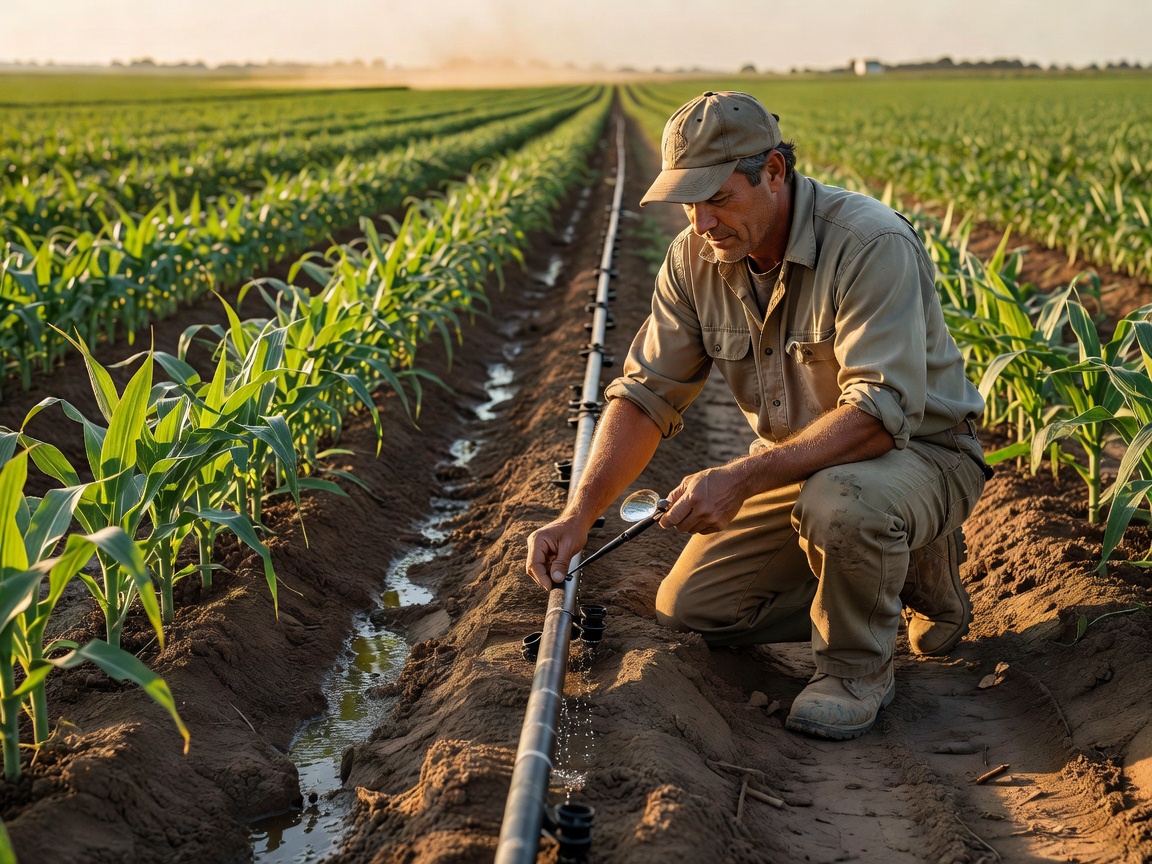
Automated irrigation creates a record of intended actions: a controller can report that a valve was scheduled or a pump was commanded to run. That record is useful, but it is not the same as verification. A valve may stick, a pump may lose capacity, a filter may clog or a damaged line may divert water. Field checks connect operating records to physical delivery and soil response.
Plan checks around risk and the system
A sensible inspection routine reflects the irrigation method, system age, water quality, field operations and consequences of failure. Check high-risk components before the season, after repairs, following unusual readings and at intervals suited to local conditions. During the operating period, choose representative zones and points that can reveal likely problems—not only the easiest outlets to reach.
Keep a simple system map and label valves, filters, pumps, meters, sensors and inspection points consistently. Agree on safe isolation and restart procedures before working on pressurized equipment or electrical controls. Follow equipment manuals, local safety rules and training requirements. A checklist should make the job reliable, not encourage anyone to work beyond their competence.
Inspect the water route systematically
At the source and pump, note abnormal noise, leaks, vibration, pressure and meter readings where available. Compare results with a known operating baseline, taking account of source level and the combination of zones running. Inspect filters and screens for debris and pressure difference where the design provides for it. Clean or service components according to the manufacturer’s instructions and the character of the water.
Walk mainlines, submains and laterals for wet spots, exposed sections, damaged fittings, unusual movement and evidence of leakage. Check valves for signs of a failed seal or incomplete opening. Look at pressure regulators and air-release devices as part of the system’s planned maintenance. After field operations, inspect areas where machinery may have disturbed or crushed lines.
For drip systems, examine representative emitters and flush lines if the design and water-quality plan call for it. A container-and-timing check can help identify changes in emitter output when performed consistently and safely. For sprinkler systems, inspect nozzles, risers, pressure and visible pattern. For a moving system, check the condition of drive components and alignment according to its maintenance instructions. Do not infer that every emitter or nozzle is operating from one sample.
Check what happened in soil and crop
After irrigation, revisit the zone and inspect a representative set of locations. Look for runoff, ponding, dry patches, excessive wetting beyond the crop’s active area or a pattern that differs from expectations. Carefully assess soil moisture at depths relevant to the crop and monitoring plan. In a drip block, wetting may form a localized pattern; interpretation should account for the emitter position and soil texture. In other systems, water may distribute differently across the row or field.
Crop condition offers clues, but it is not an instant or unambiguous measure of irrigation performance. Nutrient problems, disease, pests, root restriction, salinity, heat and other conditions can resemble water stress. Pair crop observations with soil and equipment checks. Note the date, crop stage and recent conditions so changes can be interpreted later.
Use a checklist that creates useful evidence
- Confirm the intended zone, schedule and actual start/stop record.
- Check water source, pump operation and pressure or flow where suitable instruments are available.
- Inspect filters, valves, fittings, lines and representative outlets.
- Look for leaks, blockage, runoff, ponding and uneven application.
- Compare soil observations with sensor trends at known depths and locations.
- Record weather, crop stage, maintenance actions and any unresolved issue.
- Recheck after a repair or meaningful change to operating settings.
Make the checklist easy to complete. Use clear zone names, concise options and a place for unusual observations. Avoid records that merely tick boxes without identifying where a reading was taken or what changed. If a measurement seems implausible, mark it as uncertain and investigate rather than entering a false precision.
Diagnose mismatches one link at a time
When a sensor indicates wet soil but a crop area appears stressed, first confirm sensor depth, location and function. Then check whether the sensor represents the affected part of the zone. If the controller records an irrigation event but the soil remains dry, verify the valve, pump, pressure, filter and application equipment. If a zone becomes wetter than expected, investigate rainfall, leaking valves, schedule overlap, drainage and sensor placement.
Change one important factor at a time when possible and record what was altered. That makes it easier to see whether a repair or schedule adjustment changed the outcome. Use an appropriate specialist for pressure testing, electrical work, water-quality analysis or system redesign when those tasks require expertise. A field note is valuable even when it records an unresolved question.
Maintenance keeps the record credible
Clean, inspect and replace components on a routine suited to the system rather than waiting for obvious failure. Keep spare parts for common repairs where practical, protect sensors and wiring, and update the system map when components move. After maintenance, check that the relevant zone operates as expected and that logs, labels and sensor records still describe the current setup.
Over time, records can reveal recurring faults, seasonal patterns and where inspection effort is worthwhile. They cannot establish universal savings or guarantee a crop result. Their purpose is to make the path from measurement to action to field response more transparent. The final check is not simply whether automation ran; it is whether the intended water reached the intended place in a way that fits the crop and local conditions.