Field notes / Answers
IRRIGATION QUESTIONS ANSWERED
Nine grounded answers about what automated irrigation can do—and what still needs a field check.
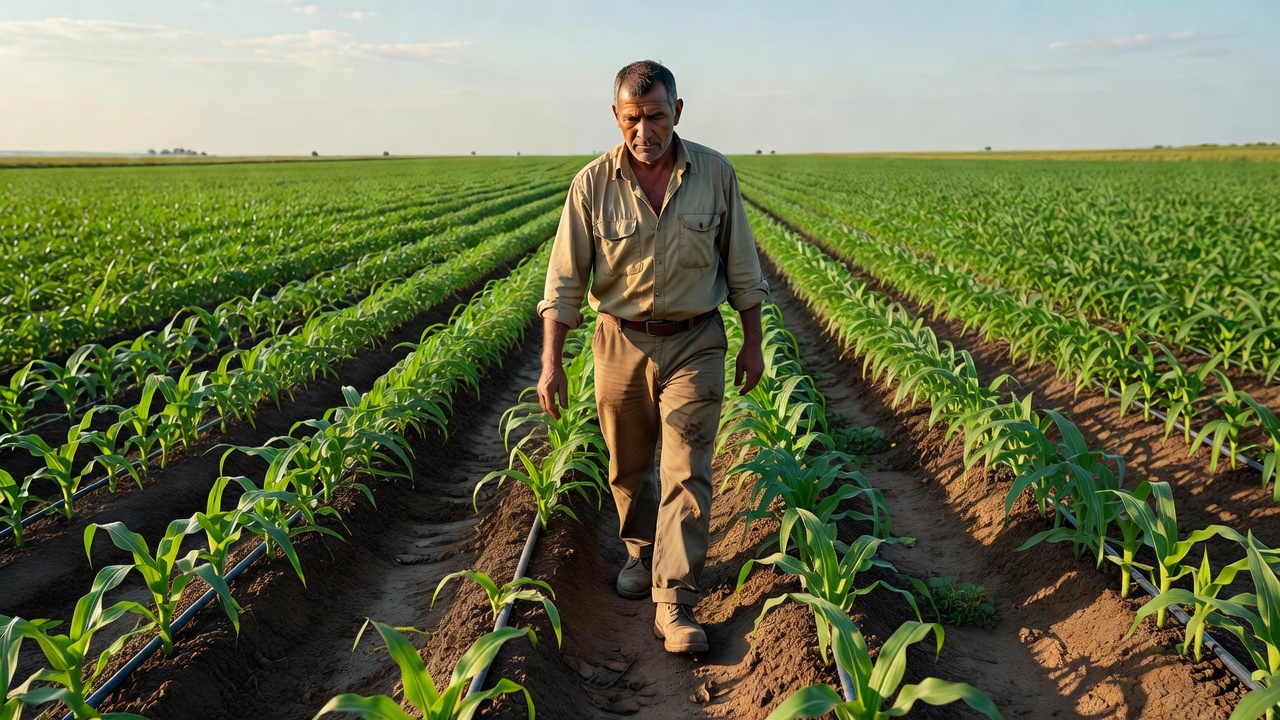
1. What does smart agricultural irrigation mean?
It is the use of observations, controls and distribution equipment to inform and operate irrigation. It may combine soil or weather data, schedules, valves, pumps and records. “Smart” describes a connected decision process, not a guarantee that every choice is right.
2. Can automation replace field checks?
No. A controller can record a command, but that does not prove a pump ran or water reached the root zone. Inspect equipment and soil, compare observations with records, and maintain the system.
3. Where should soil moisture sensors be installed?
Choose representative management zones and depths that relate to crop roots and the question being asked. Consider soil texture, irrigation method, crop row, slope and field variability. Document each installation and check readings against field conditions.
4. How many sensors does a field need?
There is no universal number. The useful count depends on field size, variability, crop, irrigation layout, budget and decisions to be supported. A few well-placed, maintained instruments can be more useful than many poorly documented ones.
5. Are all moisture sensor readings comparable?
No. Instruments may measure or estimate different properties and use different calibration assumptions. Check units, method, soil conditions, installation and manufacturer guidance before comparing readings or applying thresholds.
6. What is the difference between pressure and flow?
Pressure describes force at a point in the water system; flow describes the volume moving over time. Both can help assess performance. A pump reading alone may not reveal a restriction or uneven delivery farther down a line.
7. How often should irrigation equipment be inspected?
Set a routine that reflects system type, age, water quality, operating season and local risks. Inspect before operation, after repairs, when readings look unusual and at intervals suited to the equipment. Follow its maintenance instructions.
8. Does a smart controller guarantee water savings?
No. Results depend on the crop, soil, weather, system design, maintenance, schedule and local management. Automation can support consistent decisions and records, but claims about outcomes need relevant evidence and context.
9. What should be recorded after an irrigation event?
Record the zone, intended and actual run times, readings or weather considered, rainfall, equipment observations, repairs and field response. Keep zone labels consistent so controller logs, sensor records and field notes can be compared.
Source notes and useful references
Use primary technical guidance and local extension resources for decisions. The following institutions, standards and references offer starting points; consult current editions and local requirements, since recommendations vary by crop, region and system.
- FAO Irrigation and Drainage Paper 56, Crop Evapotranspiration.
- FAO Irrigation and Drainage Paper 66, Crop Yield Response to Water.
- USDA Natural Resources Conservation Service, National Engineering Handbook, Part 623, Irrigation.
- USDA NRCS Conservation Practice Standard 449, Irrigation Water Management.
- ASABE/ANSI EP405, Design and Installation of Microirrigation Systems.
- ASABE/ANSI S436, Test Procedure for Determining the Uniformity of Water Distribution of Center Pivot and Lateral Move Irrigation Machines.
- ISO 9261, Agricultural irrigation equipment — Emitters and emitting pipe — Specification and test methods.
- ISO 15886, Agricultural irrigation equipment — Sprinklers.
- International Commission on Irrigation and Drainage (ICID), irrigation and drainage knowledge resources.
- University of Nebraska–Lincoln Extension, irrigation management and soil water monitoring resources.
- University of California Agriculture and Natural Resources, irrigation and water management resources.
- Oregon State University Extension, irrigation management publications.
- Colorado State University Extension, crop water use and irrigation resources.
- University of Minnesota Extension, irrigation scheduling resources.
- Texas A&M AgriLife Extension, irrigation management resources.
- University of Georgia Cooperative Extension, irrigation scheduling and system evaluation resources.
- US Geological Survey, water data and groundwater information.
- National Oceanic and Atmospheric Administration, climate and weather observations.
- FAO AQUASTAT, global water and agriculture information system.
- USDA Agricultural Research Service, water management and irrigation research.